
Fellow
James P. Ferry, Ph.D.
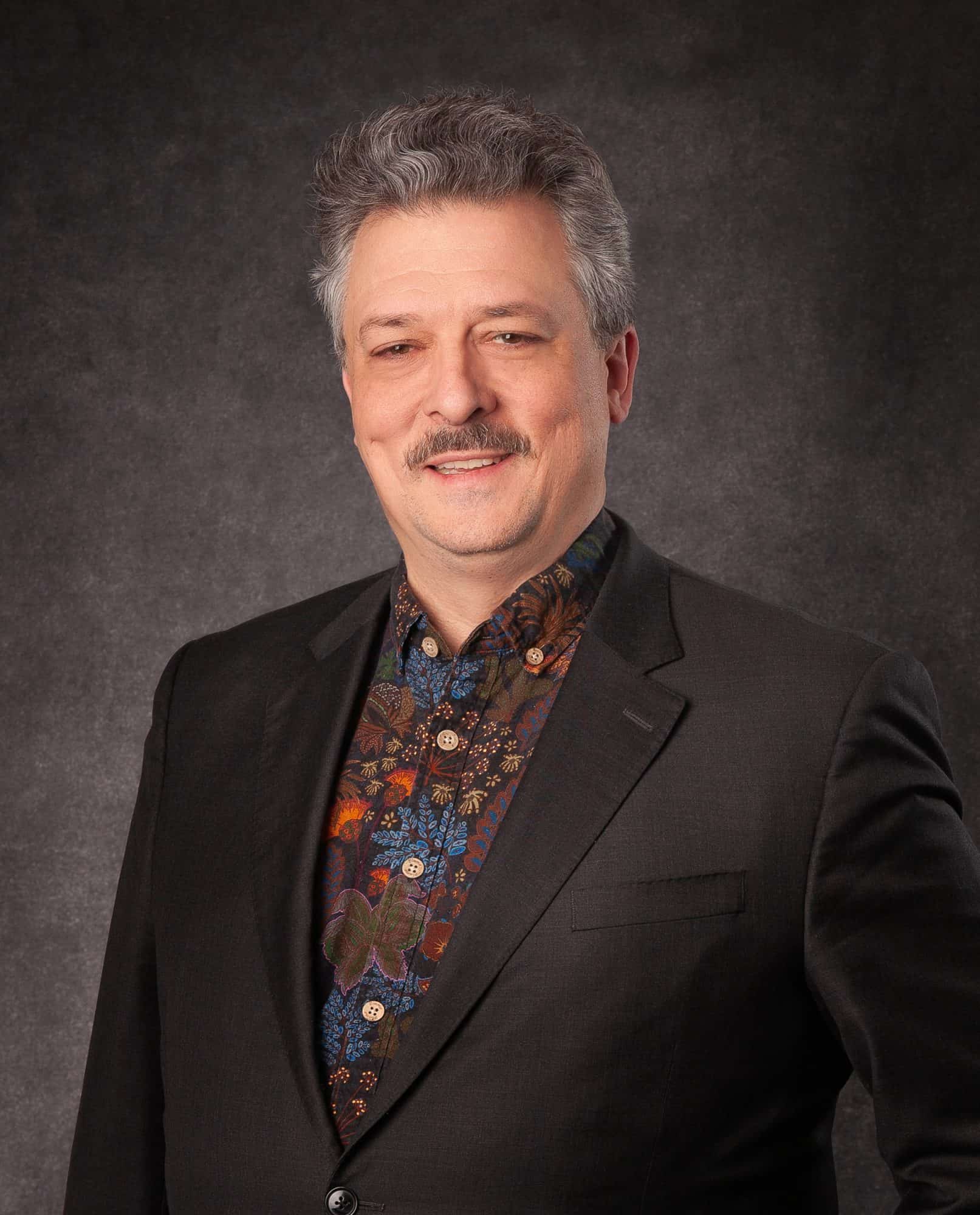
Dr. Ferry’s technical expertise is the application of probabilistic modeling to complex defense and intelligence problems. He has developed principled inference solutions for a variety of domains, including neural networks, search theory, social network analysis, and data association. His current focus is Dynamo: a Bayesian decision-theoretic framework for Test & Evaluation that helps test authorities manage uncertainty, quantify risk, and accelerate the testing of military systems.
Dr. Ferry joined Metron in 2004. He has been the Principal Investigator of R&D projects for DOT&E, DARPA, the IC, IARPA, ONR, and MDA. For DOT&E, he led the team that developed Dynamo, which reformulates Test & Evaluation as a problem in Bayesian decision theory. Dynamo quantifies the value of proposed test points in terms of their expected impact on test-authority decisions. It streamlines test plans by weighing the expected benefit of additional knowledge against the costs, risks, and delays of additional testing.
For DARPA’s QED-for-RML program, Dr. Ferry developed fast algorithms for computing distributions over image classifiers in the infinite-width limit, where neural networks converge to Gaussian processes, and used the resulting metrics to detect adversarial images. Dr. Ferry worked closely with the Intelligence Community for more than a decade developing Bayesian search theory methods that leverage novel data sources to locate targets of interest. For IARPA he developed a Bayesian theory of detection on networks by extending classical detection theory to transactional data; for ONR he extended this work to develop probabilistic methods for detecting and tracking communities in dynamically evolving network data. For MDA, Dr. Ferry developed XMAP, a mathematical framework for data association that generalizes kinematic-only association to incorporate data from target-type classifiers and other feature-extraction algorithms. He also developed an XMAP-based algorithm that was transitioned into operational missile defense systems.
Dr. Ferry has more than 30 publications, including articles in the Journal of Advances in Information Fusion, Journal of Computational Physics, International Journal of Multiphase Flow, ITEA Journal of Test and Evaluation, and Discrete Applied Mathematics. He was the Finance Chair for FUSION 2015 and organized a full-day special session on network science for the conference. He co-organized WIND 2016 (Workshop on Incomplete Network Data) and organized a multi-day session on the Frontiers of Networks at the MORS METSM meeting in December 2016.
From 1998 to 2004, Dr. Ferry worked at the Center for Simulation of Advanced Rockets at the University of Illinois, where he developed multiphase fluid dynamics models and algorithms for supercomputer simulations of the Space Shuttle Solid Rocket Motor. He was a Visiting Scholar at Rockefeller University in 1993–94. His doctoral work in computational fluid dynamics under Lawrence Sirovich extended Dr. Sirovich’s method of snapshots to exploit non-Abelian symmetry groups. The method of snapshots remains relevant today as a foundation for leading approaches to surrogate modeling for computationally intensive digital twins.